
The via ferrata set in a nutshell
- a via ferrata lanyard with an energy absorber (mandatory),
- a climbing harness (mandatory),
- a climbing helmet (mandatory),
- a resting lanyard, very useful on harder routes,
- ferrata gloves, approach shoes and a backpack for comfort and confident movement.
1. The via ferrata lanyard with an energy absorber, the heart of the set
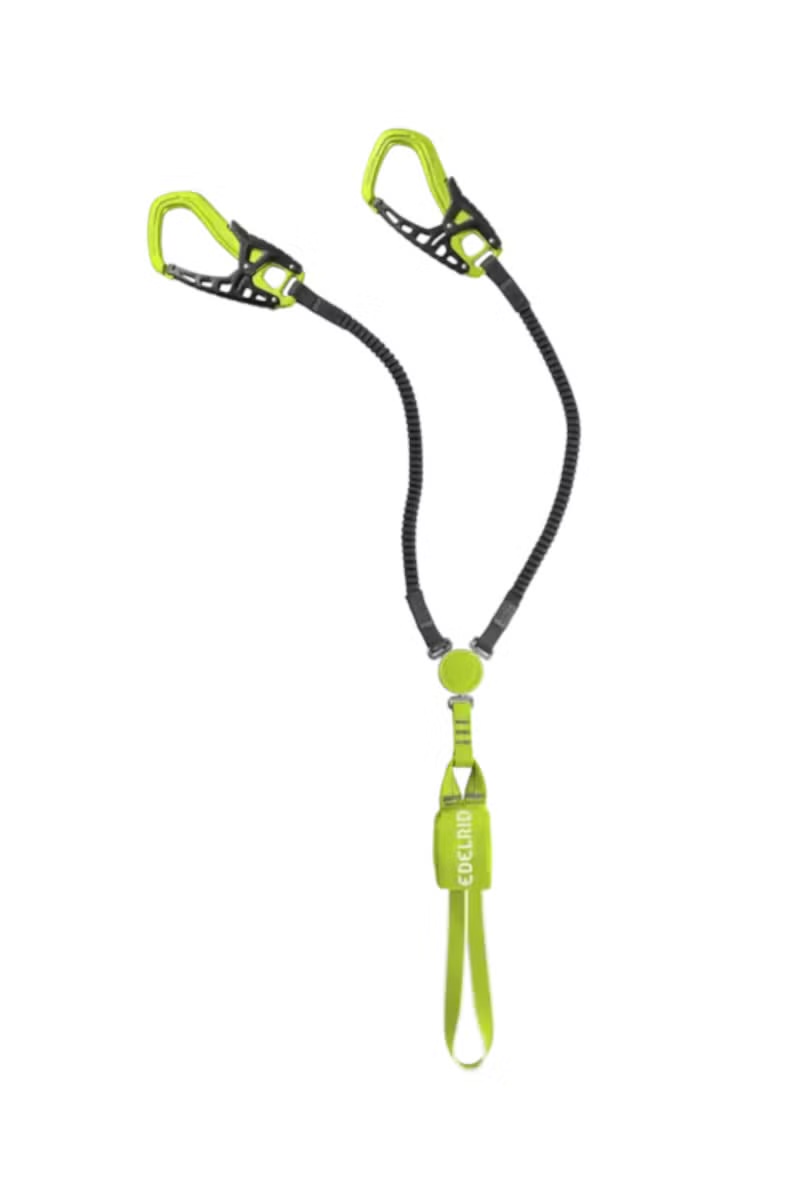
The lanyard (also called a ferrata set or “self-belay kit”) is the piece of equipment that quite literally keeps you alive. It is shaped like the letter Y: the two arms ending in large K-type carabiners clip into the steel safety cable, and the third end attaches to your harness. Between them sits the energy absorber, a specially stitched length of webbing that tears in a controlled way during a fall and absorbs the energy of the impact.
Why is the absorber so important? On a via ferrata you are not protected by a stretchy dynamic rope, but by a rigid steel cable fixed to the rock. Falling means dropping along the cable all the way down to the nearest anchor. Without an absorber, the forces acting on your body would be many times greater than what a human can safely withstand. That is why an ordinary rope, a sling or an old lanyard without an absorber can never replace a proper via ferrata lanyard.
What to look for:
- The current standard (EN 958:2017) covers users weighing 40 to 120 kg. Older lanyards made before 2017 protect lighter users less effectively.
- K-type carabiners with an automatic gate lock must be easy to operate with one hand, because on a ferrata you clip and unclip them constantly.
- The lanyard is single-use in the sense that after a fall that tears the absorber it is no longer fit for use and must be retired.
Our advice: if you are buying a lanyard of your own, it is worth paying a little extra for a model with large, wide carabiners that open with a single movement of your hand. On a long ferrata you clip in hundreds of times and the difference in comfort is enormous. A good example is the Edelrid Cable Comfort TRI: super comfortable, wide carabiners you can handle even with gloves on.
2. Climbing harness
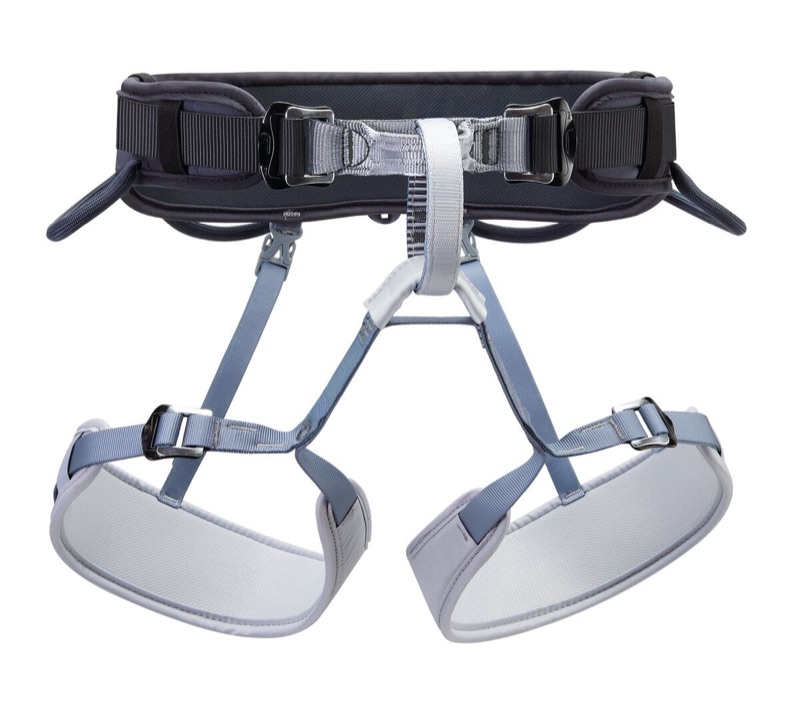
For via ferratas a classic sit harness, the same type used for climbing, is entirely sufficient. It should be adjustable, well fitted (once tightened, the waist belt must not slide down over your hips) and comfortable, because you will spend several hours in it.
Small children are the exception: with their low weight and high centre of gravity, a full-body (combination) harness that also wraps around the chest is safer. If you are planning ferratas with children, call us to discuss the right gear.
3. Climbing helmet
On ferratas the biggest everyday hazard is not falling at all, but falling rocks, knocked loose by other tourists, chamois or the wind. That is why you put your helmet on at the first rungs and take it off only after leaving the route.
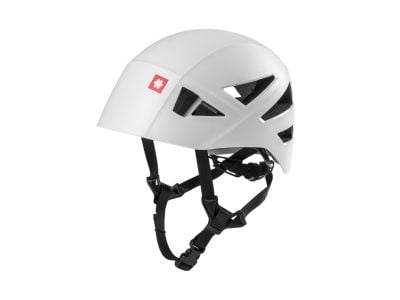
The right helmet is a climbing helmet, which, unlike a bike or ski helmet, is tested against impacts from above and from the side, including falling rocks. The helmet must also fit properly: once buckled, it must not shift when you shake your head.
4. The resting lanyard: a small extra, a big difference
A short lanyard with a carabiner that you clip into a rung or step to rest on a steep section without holding on to the cable with sheer arm strength. On easy routes it is unnecessary, but on harder ones (C/D and up) it can save your forearms from getting “pumped” and lets you calmly take photos or eat an energy bar on a rock ledge.
You do not have to buy a ready-made product. The cheapest version is an ordinary 60 cm climbing sling plus a screwgate HMS carabiner, a few dozen zlotys in total. Just remember that the sling is for resting only and never replaces the lanyard with an energy absorber — we cover this in more detail in our post on how to stay safe on a via ferrata.
In our rental sets the resting lanyard is always included, so you do not have to remember it separately.
5. What else is worth taking?
- Ferrata gloves protect your hands from blisters, abrasions and burrs on the steel cable, which in the morning or high in the mountains can also simply be ice-cold. There is no need to overpay for “ferrata” models: cheaper fingerless climbing or cycling gloves will do.
- Approach shoes or lightweight hiking boots with a sole that grips on rock (not sandals and not smooth-soled sneakers). A proven classic is the La Sportiva TX4 with a grippy Vibram sole.
- A small backpack with water (at least 1.5 l in summer), snacks and a rain jacket.
- A headlamp, because some ferratas lead through tunnels and the descent can drag on until dusk.
- A first-aid kit and an emergency blanket are essentials in the mountains, whatever the route.
Buy or rent?
A new set is a considerable expense: a lanyard with an absorber costs 250–450 zł, a harness 150–300 zł and a helmet 150–300 zł, which most often adds up to 550–1000 zł or more. If you still prefer to own your gear, you can compare current prices of lanyards, harnesses and helmets at the Skalnik mountain shop. Just bear in mind that safety equipment has a limited lifespan (manufacturers usually state a maximum of 10 years from the production date, less with frequent use), so gear bought “for later” loses value even sitting in a wardrobe.
If you go on ferratas once or twice a year, the maths is simple: renting a complete, regularly inspected set from us costs from 30 zł per day (a weekend with 1 set is 130 zł), with a refundable 250 zł deposit. You can pick the set up in person at our via ferrata rental in Wrocław or order it with InPost delivery and return across Poland for 45 zł — including to Warsaw and Kraków. The parcel waits in a parcel locker before your trip.
Check availability for your dates: you will see the price right away in the booking form, with no phone calls and no waiting for a quote.
Book a set onlineFrequently asked questions
Is an ordinary rope or sling enough for a via ferrata instead of a lanyard?
No. When you fall on a via ferrata you drop along a rigid steel cable, and the forces acting on your body are greater than in climbing with a dynamic rope. Only a lanyard with an energy absorber compliant with the EN 958 standard absorbs the energy of a fall.
Is a bike helmet suitable for a via ferrata?
No. A bike helmet is tested for different kinds of impacts. For a ferrata take a climbing helmet compliant with the EN 12492 standard, which protects against falling rocks and hitting the rock.
How much does a complete via ferrata set cost to buy?
Most often 550–1000 zł or more for a new set (lanyard, harness, helmet). With one or two trips a year, renting from 30 zł per day is far cheaper.
What does a rental via ferrata set include?
A set from Via Ferrata Rental is an energy-absorbing safety lanyard, a resting lanyard, an adjustable harness and a climbing helmet. Everything in one package, with pickup in Wrocław or InPost shipping across Poland.
The Skalnik shop links in this article are affiliate links. If you buy gear through them, we receive a small commission and you pay exactly the same price. This helps us keep developing the blog and the rental service.